Carry-on Vs Personal Item: What’s the Difference to Save You Money?
As an Amazon Associate, I earn from qualifying purchases. Please note that a few of the links in this article are actually affiliate links. This means that if you click on them, I will get a commission, without any extra cost to you. I only recommend products or services that I personally tested and highly recommend.
Are you confused about the difference between a carry-on vs personal item when it comes to air travel?
You’re standing at the airport gate with your kids, and suddenly the gate agent announces: “Only one carry-on and one personal item per passenger.”
Your teen is holding a backpack, you’ve got a tote bag and a suitcase, and suddenly you’re wondering… does this count as a carry-on or a personal item?
Don’t worry – you’re not alone! It can be tricky to understand the difference between a carry-on and a personal item when you’re packing for a flight. In this blog post, we’ll explore what a carry-on and a personal item are, how they differ, and what you may need them for when traveling.
Many major airlines and budget airlines offer basic economy fares. These usually do not come with the perks of free checked bags. Some airlines also charge for carry-on luggage.
If you want to avoid baggage fees and additional charges, consider what you can take as a personal item.
What is considered a personal item vs a carry-on? In short, a personal item can fit under the seat in front of you, even if it is a small suitcase. A carry-on must be stowed in the overhead bins.
By the end of this guide, you’ll know exactly what counts as a carry-on, what counts as a personal item, and how families can avoid expensive baggage mistakes.
What are the main differences between a carry-On vs personal item Size?
A carry-on goes in the overhead bin, while a personal item must fit under the seat in front of you.
| Carry On | Personal Item | |
|---|---|---|
| Hard Shell Suitcase | ✅ | ❌ |
| Duffel or soft shell suitcase | ✅ | ✅ as long as it fits under the seat |
| Between 17″x10″x9″ and 22″x14″x9″ | ✅ | ❌ |
| Smaller than 17″x10″x9″ | ✅ | ✅ |
| Weight Restrictions | Depends on Airline | ❌ |
What is a Carry-on?
A carry-on is any bag or item of luggage that you bring with you on an airplane.
This is not the same as checked bags. However, what you use as a carry-on can be a checked bag.
It must fit into the overhead compartment or under your seat and meet certain size requirements. While it varies with airlines, the standard size for carry-on is usually 22″x14″x9″.
Anything can be a carry-on as long as it fits within those size limits. This includes duffel bags, backpacks, totes, laptop bags, and suitcases. Depending on the airline, there may be a limit on the number of carry-ons you can bring.
What is allowed in a carry-on bag
Generally, carry-on items are limited to what you will need during the flight, such as electronics, books, toiletries, snacks, and medications. Keep in mind that toiletries and liquids must pass through TSA screening first and cannot be 100 mL (3.4 oz).
Items prohibited in carry-on bags include weapons of any kind, flammable items, large containers of liquids or gels (such as shampoo or lotion), and tools. The TSA may also require additional items to be checked rather than carried on. Be sure to check with your airline before packing your carry-on bag to find out their specific rules and regulations.
A lot of these travel accessories for women are perfect for your carry-on and are allowed.
Are there weight limits for carry-on bags?
When it comes to flying, weight limits for carry-ons and personal items are important to keep in mind. Different airlines have different weight restrictions for carry-ons, so make sure to double-check with the airline you’re flying with before packing.
Most domestic airlines allow carry-ons without weight restrictions. International flights may vary.
While you may not have a weight restriction with a carry-on item, keep in mind you have to lift it over your head. Most of the time, however, a flight attendant
These travel packing tips will help you maximize space too.
What Counts as a Personal Item on a Plane?
A personal item is a smaller bag you can bring on your flight. It must fit underneath the seat in front of you and should be no bigger than 17″x10″x9″ (22x25x43 cm). Commonly, people use backpacks, purses, diaper bags, small duffel bags, or laptop cases as personal items. It is a good idea to check specific measurements with your airline.
What is considered a personal item vs. a carry-on depends on the plane’s personal item size limit. While a laptop bag may be a carry-on, if it’s small enough, it can also be a personal item.
When traveling with teens, I’ve learned that backpacks work best as personal items because they can hold chargers, snacks, and headphones — things kids constantly need during a flight.
Essentially, a carry-on vs. a personal item comes down to whether the item fits under the seat in front of you or in the bins above you. How big a personal item can be on a plane depends on the airline.
Often, you can take a personal item for free on an airline, which makes them an attractive choice.
Examples of personal items
What counts as a personal item? Essentially anything smaller than the measurements listed above. This can include:
- small purse
- small bag
- assistive devices
- camera bags
- laptop bag
- small backpack
- briefcase
- underseat luggage
- hip bag or fanny pack
- small handbag
- travel backpack
When traveling, a hip bag or fanny pack is a great idea overall. Check out these best anti-theft fanny pack choices for travelers.
When flying with teens, I always keep chargers, snacks, and headphones in the personal item instead of the carry-on. That way, they can grab them during the flight without opening the overhead bins.
What is allowed in a personal item bag
Generally, small items such as a laptop, books, a camera, magazines, snacks, and a purse are permitted in your personal item. Your personal item should not exceed the size requirements set by the airline.
When we fly as a family, I assign one child to carry the snack bag and another to carry entertainment items. That way, our carry-ons stay organized, and nothing gets lost under seats.
Personal items should not contain any prohibited items on flights, such as liquids, gels, or sharp objects. They are meant to be lightweight and small enough to easily fit under the seat.
Can a Backpack be a Personal Item?
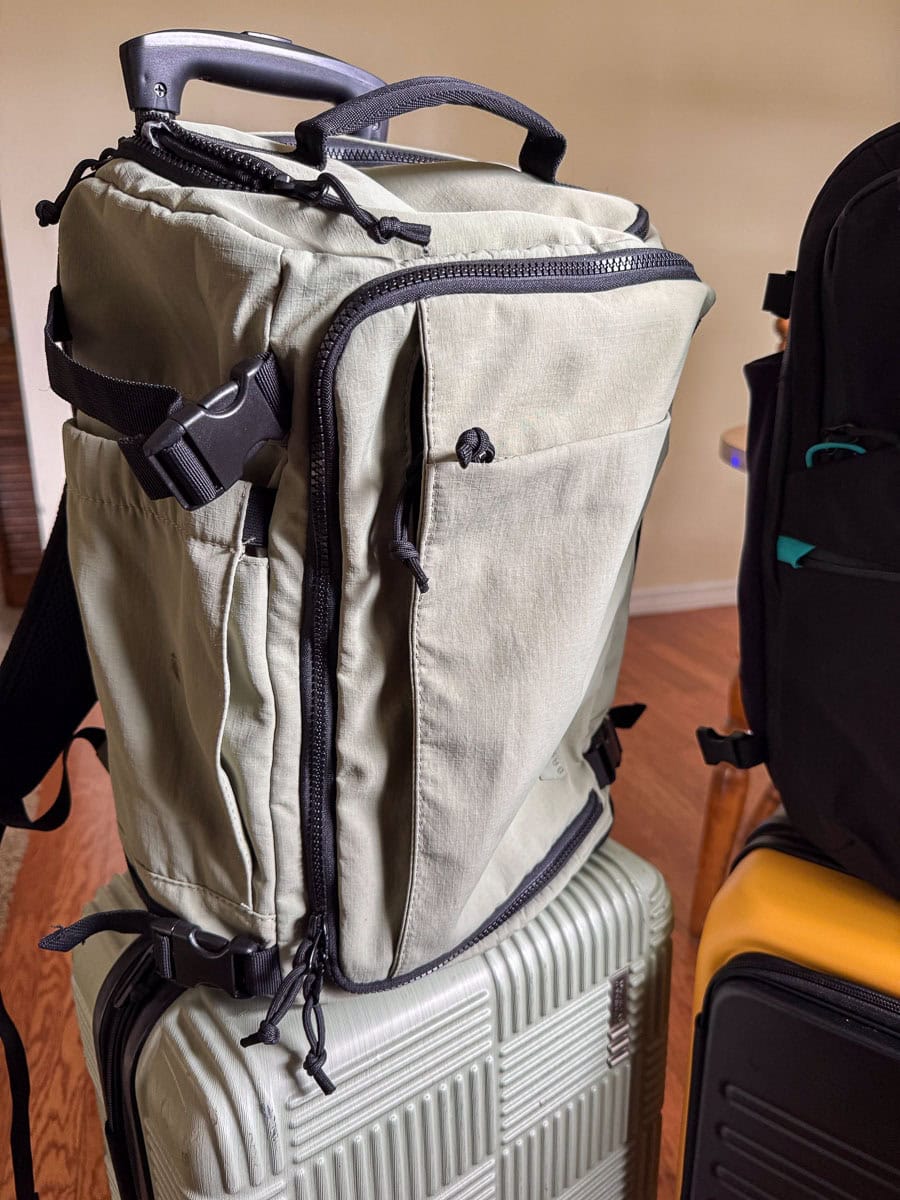
Yes, a backpack can be used as a personal item in addition to a carry-on. Backpacks are a great way to stay organized while traveling. The maximum size for a personal item is typically 17 x 10 x 9 inches, so make sure your backpack fits within those dimensions.
Generally, you should be able to fit your purse, laptop, or other essentials inside the backpack.
You may also want to consider getting a backpack that has additional pockets or compartments for easy organization.
As long as it fits under the seat in front of you, a backpack as a personal item on a plane is a great idea.
On a recent trip to Yellowstone with my teens, my daughter assumed her backpack counted as a personal item. But because she had stuffed it full of hoodies and snacks, it wouldn’t fit under the seat. The gate agent almost made us check it, which would have delayed us getting off the plane.
In that same sense, you may ask, can a duffel bag be a personal item?
Again, if it is a small duffel bag and fits under the seat, it can be a personal item.
Is a Hip Bag or Fanny Pack a Personal Item?
Does a fanny pack count as a personal item?
I think this one is a bit trickier. If you’re only allowed one personal item, a hip bag or fanny pack could be considered a personal item, the same as a purse.
However, if it’s small enough and stays strapped to your person, it could be considered part of your outfit and not count as a personal item.
While I’m not recommending you stretch the rules, if you have a hip pack, keep it on your person. It should be no different than a wallet in your pocket.
What is the difference between an under-seat luggage and a Personal Item?
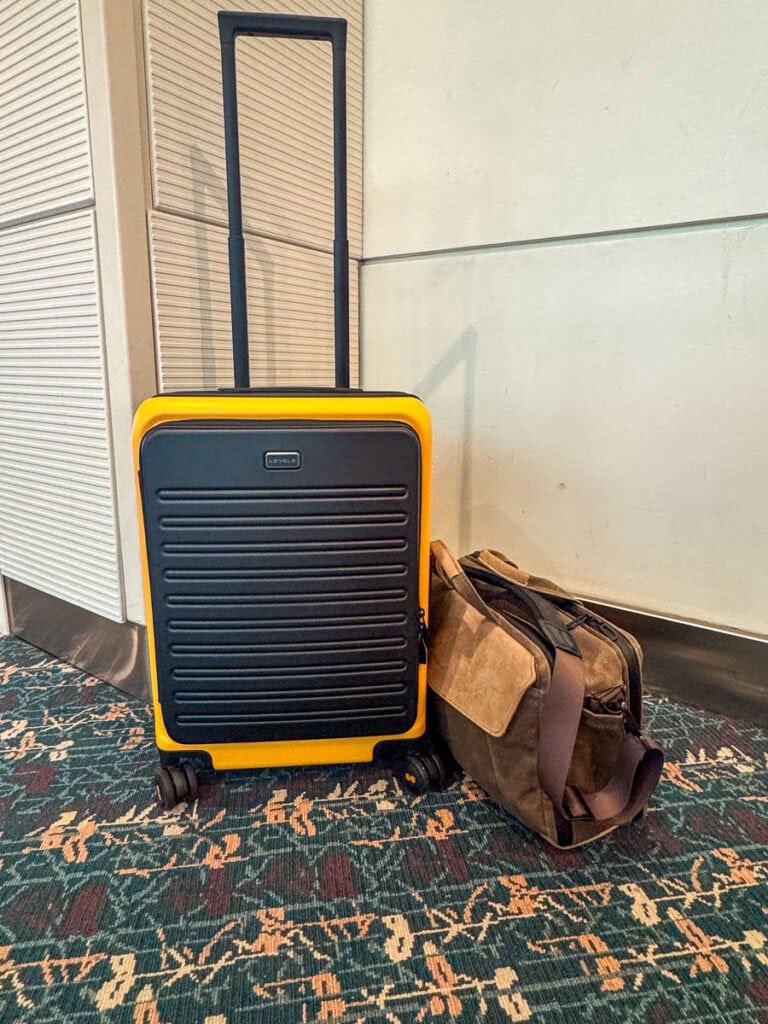
Thanks to the rise in basic economy fares, under-seat luggage items have also increased. These items are almost like a carry-on. The one I have has a telescoping handle and wheels.
The main difference between an under-seat luggage and a personal item is that it is similar to your standard idea of luggage.
Find various types of underseat luggage and baggage here. These items are generally within the size limits of most airlines’ personal item restrictions, but it’s always safe to double-check.
Weekender bags, could also be a piece of under-seat luggage.
One mistake I made early on was assuming my large tote bag counted as a personal item. On a Southwest flight, the gate agent measured it and told me it was technically a carry-on.
Is a Personal Item a Carry-on?
In short, no. A personal item can be put in the overheads, like the bigger carry-ons, but a bigger carry-on will never be a personal item
How many personal items can you have?
The answer to this question depends on the airline and flight you are traveling on.
Generally, if you are flying in economy class, you are allowed to bring one free personal item with you.
Depending on the airline and flight, you may also be allowed to bring an additional smaller item, such as a briefcase or laptop sleeve. It’s important to check with your airline before traveling to ensure you know their specific regulations for personal items.
How many carry-on bags can you bring on an airplane
The number of carry-on items you can bring on an airplane depends on the airline and the type of flight. Generally, you can bring one carry-on bag and one personal item, such as a purse, laptop bag, or small backpack.
Of course, if you are flying with your family, each of you can bring a carry-on and a personal item. This could be a way to save even more on checked baggage fees.
Can you have a personal item and a carry-on?
Depending on the airline and type of ticket purchased, you may be allowed to bring a carry-on and a personal item. In fact, most airlines allow you to bring a personal item in addition to a carry-on.
Many of your budget airlines are charging for checked bags and even carry-ons. However, since items such as a purse or small backpack fit under the seat, these are considered personal items and do not require additional fees.
Should I pack a personal item or a carry-on?
When it comes to air travel, it’s important to consider the best option between a personal item and a carry-on. It all depends on what type of items you are bringing, as well as the size and weight of your luggage.
A personal item is usually smaller and lighter than a carry-on. These are great for those who only need to bring a few items.
The advantage of a personal item is that it is typically allowed on flights without additional fees.
A carry-on, on the other hand, is designed to hold more items and is typically larger and heavier. This option is ideal for those who plan to bring multiple items, including clothes, toiletries, and electronic devices.
Ultimately, the decision between a personal item and a carry-on is up to you. If you plan to bring multiple items, it might be more cost-effective to opt for the carry-on. However, if you’re only traveling with a few essential items, then a personal item might be the best option for you.
Additionally, using items such as compressible packing cubes can help squeeze in more items into either a personal item or carry-on.
I also like these vacuum bags that don’t require a pump or vacuum. Simply roll up to press out all the excess air.
Can I travel with only a personal item?
The short answer is yes, you can travel with only a personal item. Traveling with only a personal item is possible.
If you are only traveling for short trips, the right under-seat luggage and packing tips will get you everything you need.
I have done this to avoid add-on charges on basic economy flights from Frontier Airlines, Spirit Airlines, and JetBlue Airways.
It does require good planning and a packing list, but it can be done. In fact, traveling with just a personal item is quite freeing.
Benefits include:
- Not waiting at baggage claim
- Guaranteed you won’t get your items checked by the gate agents
- Not waiting for other passengers to get items out of the overhead bins
- Items near you, and not placed in overheads far from you.
How do I get a free carry-on?
Some airlines do not charge for a carry-on with upgraded flight status beyond the basic economy. Or, if you carry their credit card, you can get free carry-on bags. This all depends on the airline’s baggage policies, which you should read before you book your flight.
Carry-on vs Personal Item: What You Really Need to Know
Understanding the difference between a carry-on vs personal item can make your airport experience much smoother — especially when you’re traveling with family.
The main rule is simple: carry-ons go in the overhead bin, while personal items must fit under the seat in front of you. Once you know that, packing becomes much easier.
For many families, the best strategy is to use a carry-on suitcase for clothes and larger items, while personal items like backpacks hold essentials you’ll want during the flight — things like snacks, chargers, headphones, and travel documents.
When we travel with teens, giving everyone their own personal item also keeps the flight organized. One bag can hold entertainment, another can hold snacks, and another can hold important items. It makes boarding, flying, and getting off the plane much less stressful.
Airlines may have slightly different baggage policies, so it’s always a good idea to double-check the size requirements before your trip. But once you understand the basics of carry-ons and personal items, you’ll be able to pack smarter, avoid unexpected baggage fees, and start your trip with less hassle.
And when traveling as a family, anything that reduces stress at the airport is always worth it.
FAQ
Is a purse considered a carry-on?
Generally, a purse is considered a personal item. Unless you consider an extra-extra-large bag a purse, as long as it fits under the seat in front of you, it’s a personal item.
How big can a personal item be
While it may vary by airline, generally a personal item can be no bigger than 17″x10″x9″ (22x25x43 cm)
Can a backpack fit under an airplane seat
In most instances, yes. While some backpacks may be too large, it’s best to check your airline’s baggage size requirements.
Does a Fanny Pack Count as a personal item
Generally, smaller bags worn on your person wouldn’t count at all. If it’s a bit larger and requires you to take it off during the flight, it would be a personal item.